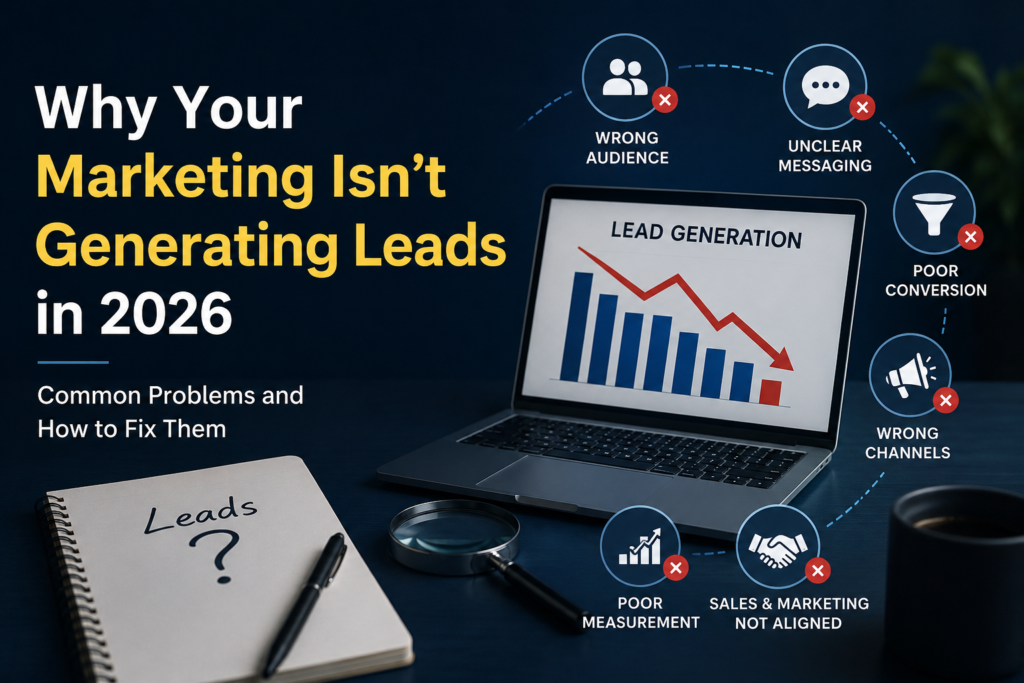

Introduction
Many businesses start with a strong vision, a good product, and early customer traction. However, as the company grows, achieving the next level of success becomes more challenging.
The strategies that worked during the early stages often stop delivering the same results. Customer acquisition becomes expensive, teams become less aligned, revenue growth becomes unpredictable, and business decisions become more complicated.
This is where a structured growth framework becomes essential.
Scaling a business is not about doing more marketing, hiring more people, or launching more products. Sustainable growth comes from building a clear system that connects strategy, customers, operations, and revenue.
A strong business growth framework helps companies identify opportunities, remove growth barriers, and create predictable results.
What Is a Business Growth Framework?
A business growth framework is a structured approach that helps companies understand where they are today, identify growth opportunities, and create a roadmap for sustainable expansion.
Instead of relying on random strategies or short-term tactics, businesses use a framework to improve critical areas such as:
- Market positioning
- Customer acquisition
- Sales performance
- Revenue optimization
- Customer retention
- Operational efficiency
Companies that scale successfully focus on building systems rather than depending on individual efforts.
Why Businesses Need a Growth Framework to Scale
Many businesses struggle to scale because growth happens without proper direction.
Common challenges include:
- Unclear market positioning
- Difficulty attracting the right customers
- Inconsistent sales performance
- Increasing customer acquisition costs
- Lack of measurable growth strategies
- Poor alignment between marketing and sales teams
Without a clear framework, businesses often spend resources on activities that do not contribute directly to revenue growth.
A growth framework creates clarity by helping leaders focus on strategies that create measurable business impact.
The 5 Core Pillars of a Scalable Growth Framework
1. Strong Market Positioning and Business Strategy
Every successful business starts with clear positioning.
Your customers should immediately understand:
- What problem your business solves
- Who your ideal customers are
- Why they should choose you over competitors
Weak positioning makes it difficult for businesses to stand out, even with a strong product or service.
A clear business strategy helps companies identify their market opportunities, competitive advantages, and long-term direction.
2. Building a Predictable Customer Acquisition System
Growth becomes difficult when businesses depend only on referrals, seasonal demand, or inconsistent marketing campaigns.
A scalable business needs a predictable customer acquisition system that continuously brings qualified prospects.
This includes:
- Understanding customer behaviour
- Selecting the right marketing channels
- Creating effective lead-generation strategies
- Improving conversion opportunities
The goal is not simply generating more leads. The goal is attracting customers who create long-term business value.
3. Creating a High-Performance Sales Process
Marketing can generate opportunities, but a strong sales system converts those opportunities into revenue.
Businesses need a structured sales process that focuses on:
- Faster lead response
- Better customer understanding
- Effective communication
- Strong value demonstration
- Improved closing rates
A scalable sales process reduces dependency on individual salespeople and creates consistency.
4. Optimising Revenue Growth
Revenue growth is not only about increasing sales.
Businesses need to understand how every part of their revenue model performs.
Important areas include:
- Customer acquisition cost
- Customer lifetime value
- Pricing strategy
- Repeat purchases
- Profit margins
By analysing these factors, companies can identify opportunities to increase revenue without unnecessary spending.
5. Building Systems for Long-Term Growth
Many businesses achieve initial success but struggle when they expand because their internal systems cannot support growth.
Scalable businesses build strong foundations through:
- Clear processes
- Data-driven decision making
- Team alignment
- Technology adoption
- Continuous improvement
Growth becomes sustainable when the business can handle increasing demand without losing efficiency.
How Growth Consulting Helps Businesses Scale Smarter
A business growth consultant helps companies evaluate their current position, identify challenges, and create a practical growth roadmap.
The focus is not on implementing random strategies but on understanding:
- Where growth is getting blocked
- Which opportunities have the highest impact
- How resources can be used more effectively
- Which systems need improvement
A strategic growth approach helps businesses make better decisions and achieve more predictable outcomes.
The Difference Between Growth and Sustainable Growth
Short-term growth can come from temporary opportunities, market trends, or aggressive spending.
Sustainable growth requires:
- A clear strategy
- Strong customer understanding
- Repeatable systems
- Continuous optimisation
Businesses that focus only on quick wins often struggle when conditions change.
Businesses that build strong growth foundations are better prepared for long-term success.
Final Thoughts
Scaling a business requires more than ambition and hard work. It requires a framework that connects strategy, customers, revenue, and operations.
The right growth framework helps businesses move from unpredictable growth to a structured approach where every decision supports long-term success.
For founders and business leaders, the biggest growth opportunity often comes from improving the systems behind the business.
A smarter growth strategy does not just help businesses grow faster. It helps them grow stronger.