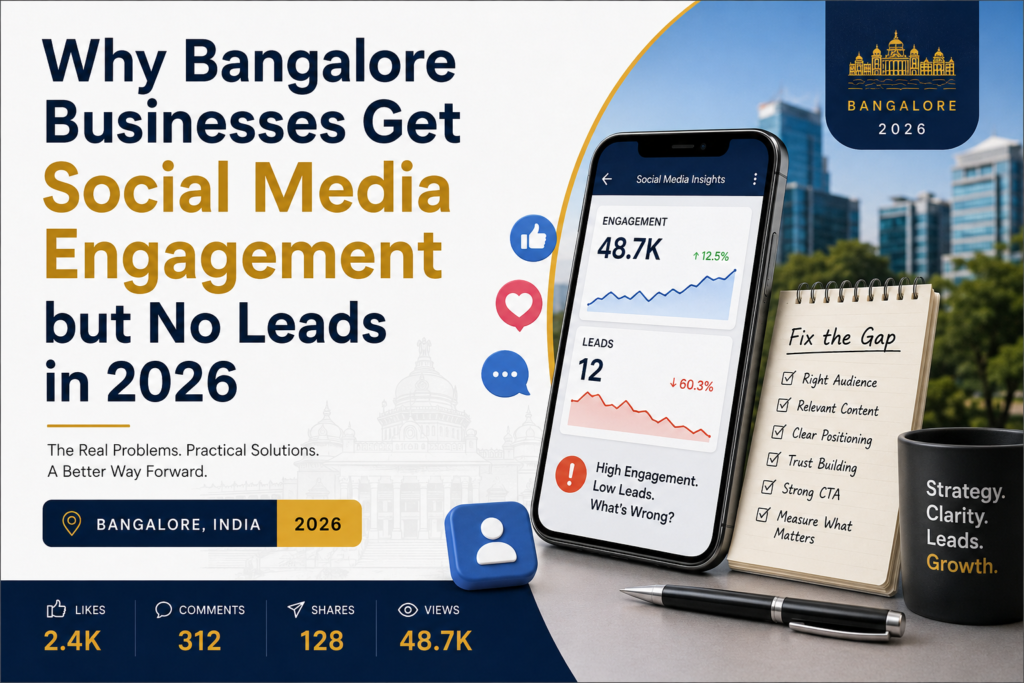

Generating consistent leads is one of the biggest challenges businesses face with digital marketing.
You may have a strong website, a good product or service, and a marketing budget, but that does not automatically mean potential customers will find you or contact your business.
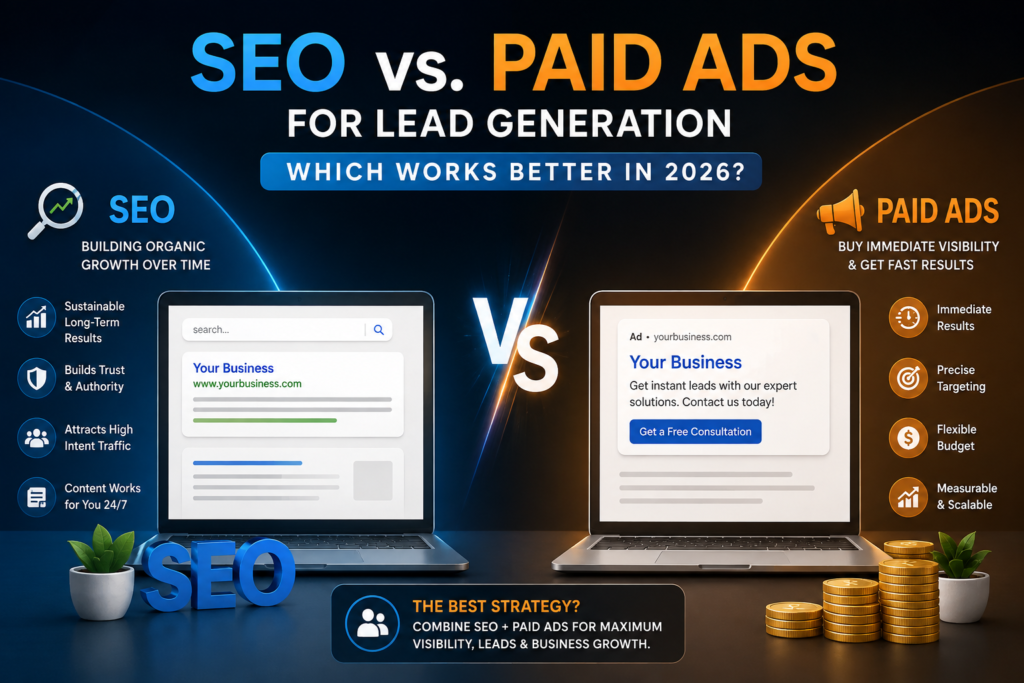
Two of the most common approaches to generating online leads are SEO (Search Engine Optimization) and paid advertising.
But which one is better?
The answer is not as simple as choosing one over the other. SEO can help businesses build long-term organic visibility, while paid advertising can provide faster access to potential customers.
The right strategy depends on your business goals, budget, competition, customer journey, and how quickly you need results.
In this guide, we will compare SEO vs paid ads for lead generation in 2026 and explain how businesses can decide which approach — or combination — makes the most sense.
What Is SEO Lead Generation?
SEO lead generation is the process of attracting potential customers through organic search engine visibility.
Instead of paying for every click, businesses optimize their website, content, technical structure, and authority so relevant pages can appear when potential customers search for information, products, or services.
For example, someone might search for:
- Digital marketing strategy for lead generation
- Best lead generation strategy for businesses
- How to generate more qualified leads
- Digital marketing consultant
- SEO strategy for business growth
If your website provides a useful answer to that search, the visitor may discover your brand and eventually become a lead.
This is where a strong marketing strategy becomes important. SEO should not operate independently from your overall positioning, messaging, conversion strategy, and business objectives.
What Are Paid Ads for Lead Generation?
Paid advertising allows businesses to pay advertising platforms to display their offers to a targeted audience.
Search advertising, for example, can help a business appear when someone actively searches for a relevant service or solution.
Paid advertising can also include display, video, social media, remarketing, and other campaign formats.
One of its biggest advantages is speed.
Instead of waiting for organic rankings to develop, businesses can launch campaigns and begin testing audiences, offers, messaging, and landing pages much faster.
However, paid traffic alone does not guarantee leads.
If the offer, landing page, targeting, or conversion process is weak, a business can spend money generating clicks without generating enough qualified enquiries.
SEO vs Paid Ads: What Is the Difference?
The fundamental difference is how visibility is acquired.
With SEO, you invest in improving your website’s ability to attract organic traffic.
With paid advertising, you pay for visibility and traffic through advertising platforms.
| Factor | SEO | Paid Ads |
| Speed | Usually slower | Usually faster |
| Long-term value | Strong potential | Depends on continued spending |
| Traffic acquisition | Organic | Paid |
| Initial investment | Content, technical SEO and optimization | Advertising budget and campaign management |
| Results after stopping spend | Organic visibility may continue | Paid traffic generally stops |
| Testing speed | Relatively slower | Faster |
| Scalability | Gradual | Can scale quickly |
| Best suited for | Sustainable growth | Immediate visibility and testing |
Neither strategy is automatically better.
The better question is:
Which strategy is best for your current business objective?
When SEO Is Better for Lead Generation
SEO can be a strong option when your business wants to build sustainable organic visibility and attract people who are actively searching for relevant solutions.
1. You Want Long-Term Organic Growth
SEO is generally a long-term strategy.
As your website builds relevant content, improves technical performance, earns authority, and establishes topical relevance, successful pages can continue attracting organic visitors.
This can make SEO a valuable part of a long-term business growth strategy, particularly for businesses operating in competitive markets.
2. Your Customers Search Before Buying
Many customers research a problem before deciding which product, service, or company to choose.
They may move through several searches:
Problem → Information → Solutions → Comparison → Provider → Enquiry
SEO allows businesses to create useful content for different stages of this journey.
Instead of targeting only transactional keywords, businesses can also educate potential customers before they are ready to make a purchase.
3. You Want to Build Authority
Organic search visibility can contribute to brand awareness and perceived expertise.
High-quality content allows businesses to demonstrate knowledge, answer customer questions, and build trust before the first sales conversation.
4. You Can Invest Consistently
SEO is not simply about inserting keywords into articles.
A sustainable SEO strategy can involve:
- Content development
- Technical SEO
- On-page optimization
- Internal linking
- Conversion optimization
- Authority building
- Search intent analysis
- Performance monitoring
Consistency matters more than publishing large amounts of content without a clear strategy.
When Paid Ads Are Better for Lead Generation
Paid advertising can be particularly useful when speed, testing, or immediate visibility is important.
1. You Need Leads Quickly
A business launching a new service, promotion, product, or time-sensitive campaign may not want to wait for organic rankings.
Paid advertising can provide immediate visibility once campaigns are properly configured.
2. You Want to Test an Offer
Paid campaigns can help businesses test different:
- Headlines
- Offers
- Calls to action
- Landing pages
- Audiences
- Keywords
- Ad messages
This can help identify which messages attract attention and which offers generate stronger responses.
3. You Have a Defined Advertising Budget
Paid advertising requires ongoing spending.
Businesses should understand their acceptable customer acquisition cost (CAC) and compare it with the value generated from each customer.
The goal should not be to maximize the number of clicks.
The goal should be to acquire profitable customers.
4. You Have Strong Landing Pages
A paid campaign cannot compensate for a poor conversion experience.
If an advertisement sends users to a confusing page with weak messaging, no clear offer, or a difficult enquiry process, the campaign may generate traffic without enough leads.
This is why marketing strategy and performance need to work together with conversion optimization.
SEO vs Paid Ads: Which Costs More?
There is no universal answer.
SEO may require investment in:
- Strategy
- Content
- Technical optimization
- Website improvements
- Internal linking
- Authority building
- Ongoing analysis
Paid advertising involves:
- Advertising spend
- Campaign management
- Creative development
- Landing page optimization
- Conversion tracking
SEO can require more patience before meaningful results appear.
Paid advertising can generate faster traffic but requires continued investment to maintain paid visibility.
Therefore, businesses should not simply ask:
“Which one is cheaper?”
A better question is:
“Which channel generates qualified customers at an acceptable acquisition cost?”
Which Generates Better Quality Leads?
Lead quality is not determined solely by whether the visitor came through SEO or paid advertising.
It depends on:
- Search intent
- Audience targeting
- Offer relevance
- Landing page quality
- Messaging
- Conversion experience
- Follow-up speed
- Sales process
For example, someone searching for a specific service may have strong commercial intent and discover your business organically.
At the same time, a carefully targeted paid search campaign can reach users with similar intent.
Therefore, businesses should not focus only on generating more leads.
The real objective is to generate more qualified leads that have a realistic chance of becoming customers.
Should Businesses Choose SEO or Paid Ads?
For many businesses, the best answer is both.
SEO and paid advertising can serve different purposes within the same marketing system.
Paid advertising can help generate immediate traffic while SEO is being developed.
SEO can gradually build organic visibility and reduce long-term dependence on paid traffic for relevant searches.
This is particularly useful for businesses focused on sustainable growth and transformation.
For a broader perspective on how businesses can prepare for changing markets, Business Growth Trends Every CEO Should Watch in 2026 provides useful context around the wider growth environment.
A Practical SEO + Paid Ads Strategy for 2026
A balanced strategy can look like this:
Short Term: Generate Demand
Use paid campaigns to test:
- Target audiences
- Keywords
- Offers
- Landing pages
- Messaging
The objective is to understand what generates qualified enquiries.
Medium Term: Improve Conversion
Use campaign and website data to improve:
- Landing pages
- Calls to action
- Lead forms
- Offers
- Messaging
- Conversion tracking
The objective is to convert more of the traffic you already generate.
Long Term: Build Organic Visibility
Develop SEO around:
- Commercial keywords
- Educational content
- Service pages
- Topic clusters
- Internal links
- Authority-building activities
The objective is to create a sustainable organic acquisition channel.
This approach allows paid advertising to support immediate opportunities while SEO builds long-term visibility.
How to Choose Between SEO and Paid Ads
Before deciding where to invest, ask these five questions.
1. How Quickly Do You Need Leads?
If you need immediate visibility, paid advertising may be useful.
If you are focused on sustainable organic growth, SEO should be part of your long-term strategy.
2. Do People Actively Search for Your Solution?
If potential customers regularly search for your products or services, SEO can be highly valuable.
If you have a new product or category that people are not actively searching for, paid advertising and demand-generation strategies may help create awareness.
3. What Is Your Budget?
Paid advertising requires ongoing media spend.
SEO requires investment in strategy, content, technical improvements, and ongoing optimization.
The best strategy is the one your business can support consistently.
4. Can Your Website Convert Visitors?
Before increasing traffic, make sure your website has:
- Clear messaging
- Relevant landing pages
- Strong calls to action
- Trust signals
- Easy contact options
- Mobile-friendly experiences
- Proper conversion tracking
More traffic does not automatically mean more leads.
5. What Is Your Long-Term Business Goal?
If you want to build sustainable organic visibility, SEO should have a significant role.
If you need immediate traffic or want to test a new offer, paid advertising may be more appropriate.
If you want both short-term acquisition and long-term growth, combining the two can be the stronger approach.
Common Mistakes Businesses Make
Focusing Only on Traffic
Traffic is not the final business objective.
A website can receive thousands of visitors and still generate very few qualified leads.
Always connect traffic metrics with conversions and business outcomes.
Expecting Instant SEO Results
SEO takes time because organic visibility depends on multiple factors, including competition, content quality, search intent, website authority, and technical health.
Treat SEO as an ongoing investment rather than a short-term advertising campaign.
Running Ads Without Proper Tracking
Without conversion tracking, it becomes difficult to understand which campaigns and keywords are actually producing valuable leads.
Sending Every Visitor to the Homepage
A visitor searching for a specific service should ideally reach a relevant page that directly addresses their needs.
Ignoring the Sales Process
Marketing can generate enquiries, but poor follow-up can still result in lost opportunities.
Lead generation should therefore connect closely with sales and business development.
For businesses thinking beyond individual campaigns and looking at sustainable scaling, The Growth Framework Every Business Needs to Scale Faster and Smarter is a relevant next read.
The Role of AI in Lead Generation in 2026
AI is also changing how businesses approach marketing.
AI can support areas such as:
- Content research
- Customer insights
- Campaign analysis
- Personalization
- Marketing automation
- Lead qualification
- Workflow automation
However, AI should support a clear business strategy rather than replace strategic thinking.
Businesses interested in the wider impact of AI can explore How AI Transformation Is Changing the Future of Businesses in India.
The opportunity is not simply to produce more marketing content with AI.
It is to build smarter systems that connect customer data, marketing activity, automation, and business outcomes.
SEO or Paid Ads: What Should You Choose?
There is no universal winner.
Choose SEO when your priority is long-term organic visibility, authority, and sustainable traffic.
Choose paid advertising when you need faster visibility, immediate traffic, campaign testing, or demand generation.
Consider combining both when you want to balance short-term lead generation with long-term organic growth.
The most effective marketing strategy is not necessarily the one that generates the most clicks.
It is the one that consistently brings the right audience to the right offer and converts attention into qualified business opportunities.
If your marketing is generating traffic but not enough enquiries or sales, the problem may not be SEO or paid advertising alone.
Your targeting, messaging, offer, landing pages, conversion process, or follow-up may also need attention.
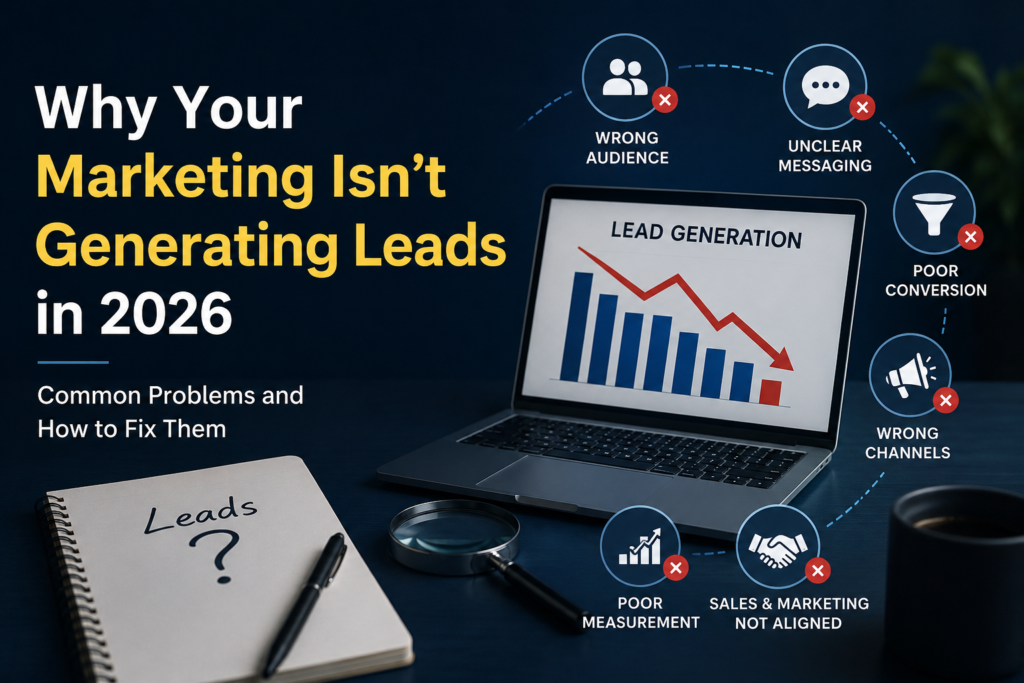
For a deeper look at this problem, read Why Your Marketing Isn’t Generating Leads in 2026: Common Problems and How to Fix Them.
Final Takeaway
SEO and paid advertising should not be viewed as competing channels that require businesses to choose one forever.
They solve different problems.
SEO builds. Paid advertising accelerates. Conversion optimization improves. Business strategy connects everything together.
For many businesses in 2026, the strongest approach is to use paid advertising to capture immediate opportunities while simultaneously building an SEO foundation for sustainable growth.
The key is not simply to generate more traffic.
The key is to create a marketing system that generates qualified leads, measurable results, and sustainable business growth For more updates connect with Dr. Nishant Jayanth